Life is notoriously unpredictable. While most people readily prepare for everyday emergencies by keeping a first-aid kit in the pantry or carrying spare tire equipment in the trunk of their car, very few take the time to prepare for legal or financial crises. Unfortunately, when a legal emergency strikes—whether it is a catastrophic vehicle collision, a sudden arrest, an unexpected death in the family, or an unmanageable financial collapse—the clock starts ticking immediately.
In these high-stress moments, making decisions under duress almost always leads to suboptimal outcomes. Desperately searching the internet in the middle of the night, picking the first name on a sponsored ad, or relying on unverified recommendations from friends can cost thousands of dollars, delay critical protections, and compromise your legal rights.
The alternative is proactive preparation: building a pre-vetted, comprehensive emergency legal network before you ever need it. By establishing relationships, auditing your risks, and organizing your contacts in advance, you transform a potentially overwhelming crisis into a manageable set of execution steps. This comprehensive guide walks you through building your personal legal emergency infrastructure step by step, ensuring that you and your family are fully protected no matter what life throws your way.
Phase 1: Auditing Your Personal Risk Profile

Building an effective legal network begins with an honest assessment of your personal risk profile. Not everyone faces the same legal vulnerabilities; a self-employed business owner with a long daily commute faces entirely different potential liabilities than a remote worker with modest assets. To create a targeted network, start by evaluating your daily routines, your financial commitments, and your family structure.
To conduct a thorough personal legal audit, consider these primary risk areas:
- Transit and Travel Exposure: How many miles do you drive weekly? Do you commute during high-traffic hours or operate high-risk vehicles like motorcycles?
- Property and Premises Risk: Do you own real estate, host frequent gatherings, or manage rental properties that could expose you to liability claims?
- Financial and Career Vulnerability: Are you carrying high levels of variable debt? Do you work in a field with elevated malpractice or personal liability risks?
- Dependents and Family Complexity: Do you have minor children, elderly parents who depend on your care, or family members with special needs?
When auditing these vulnerabilities, pay close attention to where your personal liability overlaps with commercial coverage. For example, if you are injured due to someone else’s negligence during your daily commute or while visiting a business establishment, having trusted personal injury attorneys identified in advance allows you to seek immediate guidance before speaking with aggressive claim adjusters.
Simultaneously, you must evaluate whether your existing insurance policies adequately protect your current net worth. Meeting with a licensed insurance agent to audit your policy limits, umbrella coverage, and deductibles ensures that your financial baseline is secure before a physical injury or property loss occurs. Pre-sorting these resources allows you to know exactly who handles the financial claims side and who handles the civil protection side long before an emergency forces your hand.
Finally, understand the financial mechanisms required to retain legal help on short notice. Different legal disciplines operate under vastly different fee structures. Civil litigators often work on contingency, whereas corporate, family, or protective counsel require upfront retainers. Setting aside a dedicated emergency fund specifically earmarked for initial consultations or retainers guarantees that financial friction won’t delay your access to qualified counsel when minutes count.
Phase 2: Safeguard Your Assets, Estate, and Legacy
A core pillar of any emergency legal network is proactive estate planning and asset protection. Many people assume that estate planning is reserved exclusively for wealth transfer after a long life, but in reality, it serves as a vital emergency protocol for unexpected incapacitation or sudden loss.
Every comprehensive emergency binder should include four foundational estate and health documents:
- Durable Financial Power of Attorney: Authorizes a trusted individual to manage your financial obligations, pay bills, and access accounts if you become temporarily or permanently incapacitated.
- Medical Power of Attorney (Healthcare Proxy): Designates a specific person to make medical decisions on your behalf when you are physically or mentally unable to communicate.
- Living Will / Advanced Healthcare Directive: Spells out your explicit preferences regarding life-sustaining treatment, medical intervention, and end-of-life care.
- Revocable Living Trust or Last Will and Testament: Outlines the distribution of your assets, appoints guardians for minor children, and sets conditions for inheritance.
Establishing these instruments requires the expertise of a seasoned estate planning attorney who understands the specific statutory requirements of your jurisdiction. Working with a specialist ensures that your documents meet all local legal standards, reducing the likelihood of court challenges or administrative delays during an already traumatic period.
Proactive planning focuses heavily on establishing living wills, healthcare proxies, and durable powers of attorney before health disruption strikes. On the other hand, reactive resolution deals with post-loss administration, such as asset distribution, clearing creditor claims, and managing court filings after a loved one passes away.
Equally important is planning for the administrative realities that follow a family member’s passing. Without proper structuring, assets can become locked in complex court proceedings for months or even years. In the event of a death within the family, retaining a knowledgeable probate attorney becomes essential for navigating court filings, resolving outstanding creditor claims, and legally transferring property to designated heirs. Having both planning and administrative specialists identified in your network eliminates confusion during grieving periods and ensures your family’s financial stability remains intact.
Phase 3: Prepare for Roadway and Physical Safety Hazards
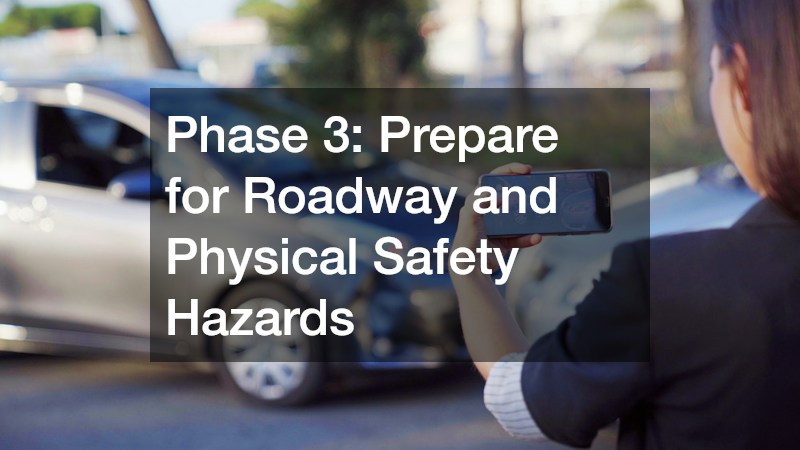
Motor vehicle collisions and sudden physical trauma represent some of the most common legal emergencies individuals face. The immediate moments following a serious highway incident are chaotic, confusing, and high-stress. Having a pre-planned roadway emergency protocol prevents costly mistakes that could compromise your health and legal rights.
When involved in a major vehicular collision, your immediate focus must remain on safety and documentation:
- Prioritize Immediate Safety: Move to a safe area if possible, check for injuries, and immediately call emergency services to secure medical aid and an official police record.
- Document Everything on Scene: Capture detailed photographs of vehicle positions, road conditions, traffic signs, property damage, and visible injuries. Collect contact and insurance details from all involved parties and eyewitnesses.
- Limit Verbal Statements: Stick strictly to objective facts when speaking with law enforcement. Never admit fault, speculate on speeds, or make off-hand statements regarding your physical condition.
- Seek Comprehensive Medical Care: Visit an emergency room or urgent care center immediately, even if you feel fine. Adrenaline often masks severe soft-tissue or internal injuries.
Navigating the aftermath of a severe vehicular accident requires precise knowledge of regional traffic regulations, local insurance practices, and court systems. Establishing a relationship with a skilled local car accident lawyer ensures you have immediate access to an advocate who can handle communications with insurance adjusters, secure key surveillance footage, and protect your right to fair compensation.
Tragically, some roadway incidents and physical safety breaches lead to loss of life. In these devastating situations, surviving family members face immense emotional grief alongside sudden financial hardship. Having an experienced wrongful death attorney as part of your broader professional network provides families with the specialized guidance needed to hold negligent parties accountable, recover lost future income, and navigate complex civil litigation during a time of profound loss.
Phase 4: Prepare for Local Injuries and Sudden Financial Distress
Legal emergencies are not confined to highway accidents or estate disputes. Unexpected accidents on private or public property, as well as sudden financial disruptions, can quickly derail your life if you lack dedicated professional support.
Premises liability incidents—such as slip-and-fall accidents on unsafe property, structural failures, or animal attacks—carry unique legal standards. Proving property owner negligence requires immediate evidence gathering before conditions are altered or security footage is overwritten. Partnering with accessible local injury attorneys who understand municipal codes, regional court filing requirements, and local property standards ensures that your claim is investigated thoroughly from day one. Physical accidents involve risks like evidence spoliation and require immediate scene audits based on municipal code standards, which regional injury specialists are uniquely qualified to manage.
Simultaneously, unexpected physical injuries, job loss, or sudden economic shifts can trigger severe financial distress. When medical bills accumulate, or business revenue drops precipitously, individuals often make panicked financial decisions, such as liquidating protected retirement accounts or turning to high-interest predatory loans to pay off short-term debt. Financial collapse involves threats like wage garnishment, foreclosure, and creditor harassment, all of which require a specialized financial advocate to navigate.
Phase 5: Build Immediate Response Readiness for Arrests or Detention
Of all legal emergencies, an unexpected arrest or law enforcement detention is often the most frightening. Whether stemming from a misunderstanding, a traffic stop escalation, or an alleged violation, being taken into custody requires immediate, disciplined execution of your legal rights.
If you or a family member are detained by law enforcement, remember the following critical protocols:
- Assert Your Right to Remain Silent: State clearly and politely, “I am exercising my right to remain silent, and I want to speak with an attorney.” Stop answering questions immediately.
- Refuse Unwarranted Searches: Do not consent to searches of your person, vehicle, phone, or home without a valid search warrant presented by officers.
- Do Not Resist or Argue: Remain physically calm and compliant. Challenge law enforcement actions in the courtroom, never on the street or in an interrogation room.
- Make Your Single Call Count: Contact your designated family representative or call your legal counsel directly. Never discuss the details of your situation over recorded jail telephone lines.
Having a dedicated criminal defense representative identified in advance is critical. An experienced defense advocate can intervene quickly during initial questioning, ensure your constitutional rights are respected, and represent you at preliminary arraignments to fight for reduced charges or case dismissals.
When detention occurs, constitutional protocols—such as asserting your right to silence and refusing voluntary searches—must be paired with outside network actions, like notifying designated contacts and initiating an attorney call. During hearing and release proceedings, your legal defense counsel works to protect your rights in court and challenge evidence, while release services like a bail bond agency handle bail bonds to expedite your release.
Phase 6: Document Storage, Communication, and Network Maintenance
Identifying key legal professionals is only half the battle; your emergency network is useless if your family cannot access contact details or essential documentation when a crisis strikes. Building a secure, accessible, and organized storage system is the bridge between planning and execution.
Create an “Emergency Legal Binder” in both physical and digital formats. This binder should contain vital personal information, active insurance policy numbers, vehicle titles, property deeds, and copies of key legal documents such as powers of attorney and living trusts. Store the physical binder in a fireproof, waterproof safe in your home, and keep an encrypted digital copy stored on a secure cloud server accessible via multi-factor authentication.
To keep your communication streamlined during a crisis, construct a single-page Emergency Reference Directory to place at the front of your binder. This directory should clearly list key roles alongside full names, firm titles, 24/7 direct contact numbers, and secondary backup options. Ensure you document contacts for your primary emergency representative, primary legal counsel, healthcare proxy holder, and financial power of attorney.
Ensure that your immediate family members, trusted primary contacts, and designated estate executors know exactly where this binder is located and how to access the digital files. Run a quick family drill once a year to confirm that everyone understands their role, knows who to call first, and understands how to handle emergency communications.
Using This Guide to Build Your Legal Network

Building an emergency legal network before a crisis is one of the most proactive, responsible steps you can take to protect your family, your health, and your hard-earned assets. Rather than leaving your legal rights and financial security to chance during chaotic, high-stress moments, a pre-vetted network allows you to act with clarity, confidence, and speed.
Start small: evaluate your current risks this week, organize your key documents into a centralized binder, and begin researching qualified specialists in your area. By taking these practical steps today, you transform potential legal disasters into manageable situations, ensuring that no matter what unexpected challenges lie ahead, you are fully prepared to navigate them. Whether it’s a bankruptcy attorney or a car accident attorney, it’s important to know who to call.
About the Author